

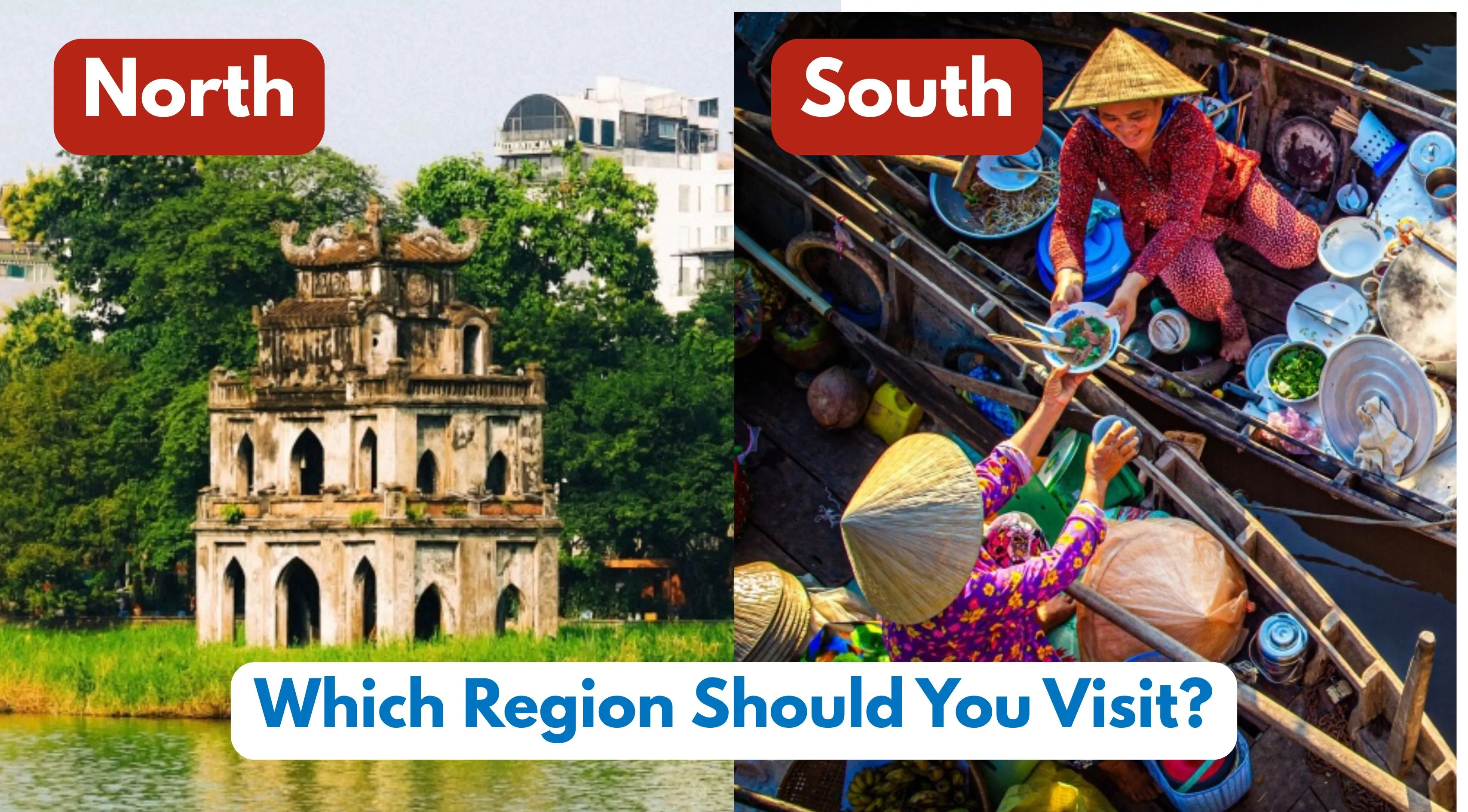
North Vietnam or South Vietnam: Which Region Should You Visit?
Should you choose North Vietnam or South Vietnam for your next trip? With Typic Travel, discover the differences between these two regions and find the perfect itinerary for your Vietnamese adventure.

Vietnam is a country of many contrasts, where every region has its own character, landscapes and way of life. From the majestic mountains, terraced rice fields and traditional villages of the North to the floating markets, tropical beaches and lively atmosphere of the South, choosing where to go can be challenging.
I. North Vietnam
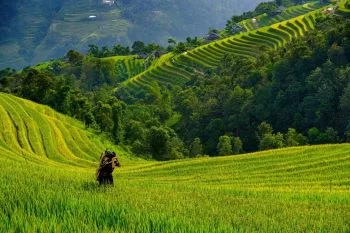
North Vietnam is often considered one of the most fascinating regions of the country. Its landscapes change dramatically as you travel: from the bustling streets of Hanoi to lush valleys and mountains covered with terraced rice fields.
A North Vietnam trip is particularly appealing to travellers who enjoy nature, cultural discoveries and meaningful encounters with local communities. It is also an ideal destination for those looking to venture beyond the usual tourist routes and take the time to discover everyday life in traditional villages.
1. Best Places to Visit in North Vietnam
Hanoi: A Capital Where Tradition Meets Modernity
Hanoi is usually the starting point for a journey through the North. Its Old Quarter, narrow shopping streets, traditional houses and pavement cafés offer a first glimpse into Vietnamese daily life. The capital can also be explored through its temples, local markets and vibrant street food scene.
Ninh Binh: A Spectacular Natural Landscape
Just a few hours from Hanoi, Ninh Binh reveals a remarkable landscape of limestone mountains, winding rivers and rice fields. A traditional boat trip through Trang An or Tam Coc takes visitors across peaceful waterways, surrounded by natural caves and lush vegetation.
Ha Long Bay and Lan Ha Bay: An Escape on the Water
Recognised as a UNESCO World Heritage Site, Ha Long Bay is famous for its thousands of limestone formations rising dramatically from the sea. For a quieter atmosphere, Lan Ha Bay is another beautiful alternative. A cruise offers the opportunity to admire these landscapes, discover fishing villages and spend a night aboard a traditional boat.
Ha Giang and Sapa: Discover Mountain Landscapes and Ethnic Cultures
For travellers seeking adventure, Ha Giang and Sapa reveal another side of North Vietnam. Winding mountain roads, deep valleys and terraced rice fields create breathtaking scenery. These regions are also home to various ethnic communities that continue to preserve their traditions, traditional clothing and local craftsmanship.

2. Why Choose North Vietnam?
North Vietnam stands out for its diverse landscapes and rich cultural heritage. It is particularly suitable for travellers who want to:
-
Explore mountains, valleys and terraced rice fields.
-
Discover the traditions of local ethnic communities.
-
Enjoy hiking and outdoor experiences surrounded by nature.
-
Explore the history, architecture and cuisine of Hanoi.
-
Experience authentic village life and homestays with local families.
3. When Is the Best Time to Visit North Vietnam?
Unlike the tropical climate of the South, North Vietnam experiences four relatively distinct seasons. Spring (March–April) and autumn (September–November) are generally popular periods thanks to their milder temperatures and favourable conditions for sightseeing.
-
March to April: Mild temperatures, green landscapes and pleasant conditions for sightseeing.
-
May to August: Hot and humid weather with more frequent rainfall, while the vegetation becomes particularly lush.
-
September to November: A popular period for exploring the mountains and rice terraces, especially in early autumn.
-
December to February: Cooler temperatures, sometimes cold in mountainous areas, with occasional fog.
II. South Vietnam
In contrast to the North, South Vietnam has a more tropical atmosphere, with warm temperatures throughout the year, vast plains, lush plantations and an extensive network of waterways that shape local life.
A South Vietnam trip is particularly suitable for travellers who want to discover a dynamic metropolis, explore the landscapes of the Mekong Delta or enjoy a few relaxing days by the sea.
1. Best Places to Visit in South Vietnam
Ho Chi Minh City: The Energy of a Vibrant Metropolis
Formerly known as Saigon, Ho Chi Minh City is Vietnam's main economic centre. The city is characterised by its fast-paced lifestyle, lively markets, modern cafés and historic buildings. The Reunification Palace, Central Post Office and War Remnants Museum are among the most interesting places to visit to better understand Vietnam's history.
The Mekong Delta: Discover Life Along the River
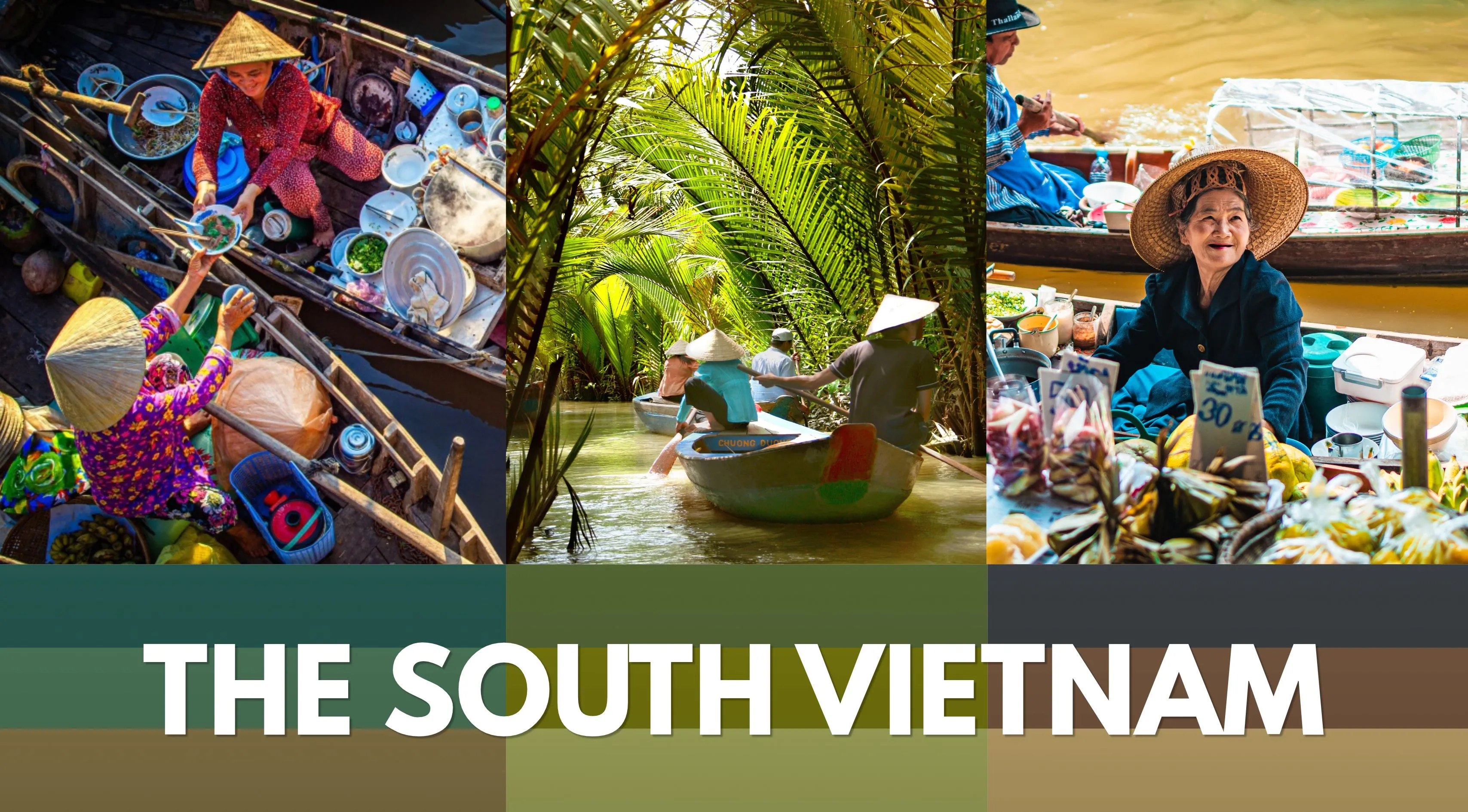
The Mekong Delta is undoubtedly one of the most distinctive regions of South Vietnam. River branches, narrow canals lined with coconut trees and tropical fruit orchards create a landscape closely connected to the water.
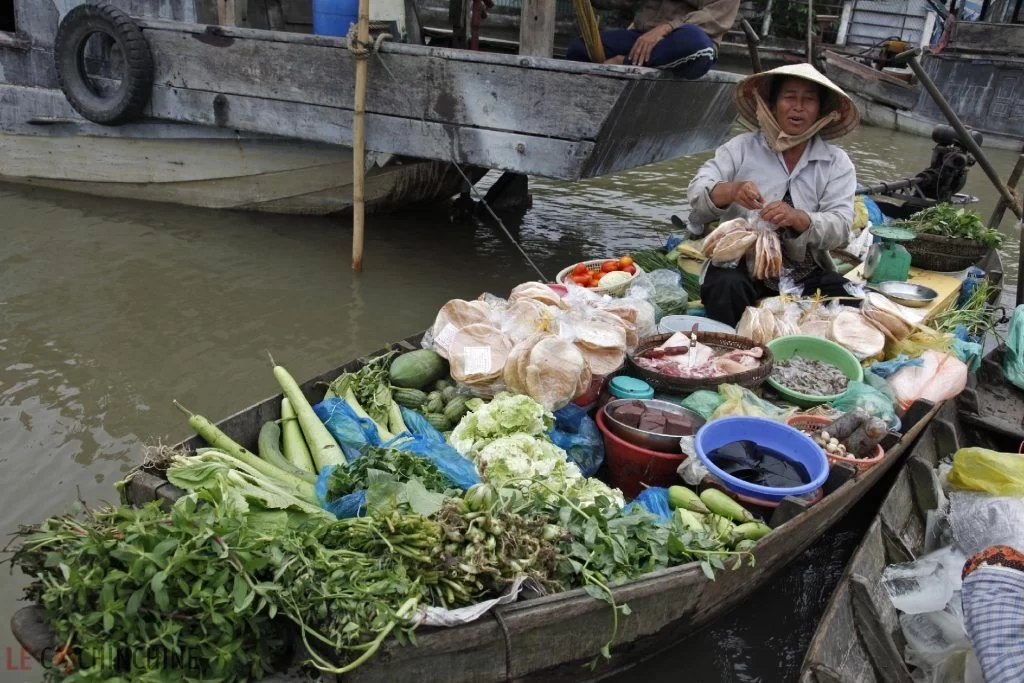
In Can Tho, travellers can visit Cai Rang Floating Market and observe trading activities taking place directly on boats. In Ben Tre, boat trips and visits to small traditional workshops offer a glimpse into local daily life in a more peaceful setting.
Cu Chi Tunnels: A Glimpse into Vietnam's History
Located near Ho Chi Minh City, the Cu Chi historical site offers insight into an important period of Vietnam's modern history. Its underground tunnels and exhibition areas provide a better understanding of wartime living conditions and the strategic importance of this network.
Phu Quoc: A Tropical Escape Between Beaches and Nature
For travellers looking to end their journey on a relaxing note, Phu Quoc is a particularly appealing destination. The island offers long stretches of pale sandy beaches, turquoise waters, fishing villages and protected natural areas. It is ideal for those who want to combine swimming, local discoveries and moments of relaxation.
2. Why Choose South Vietnam?
South Vietnam has a distinct identity shaped by river life, diverse tropical landscapes and a dynamic urban atmosphere. It is particularly appealing to travellers who want to:
-
Discover a major metropolis and its history.
-
Explore the canals, fruit orchards and floating markets of the Mekong Delta.
-
Meet local people and discover traditional agricultural activities.
-
Enjoy tropical beaches and islands.
-
Travel through a region where temperatures generally remain warm throughout the year.
3. When Is the Best Time to Visit South Vietnam?
South Vietnam has a tropical climate characterised by two main seasons: the dry season and the rainy season.
-
December to April: The dry season, with generally sunny days and favourable conditions for excursions and beach holidays.
-
May to November: The rainy season, with showers often occurring more frequently in the afternoon. The landscapes become particularly lush and green.
The rainy season does not necessarily mean that it rains all day. Travellers can still enjoy sightseeing and excursions by adapting their plans to the weather conditions.
III. North Vietnam vs South Vietnam: What Are the Main Differences?
When choosing between the two regions, it is useful to compare several factors, including landscapes, climate, activities, culture and travel atmosphere. Here is an overview of the main differences to help you identify the destination that best matches your expectations.
| Criteria | North Vietnam | South Vietnam |
|---|---|---|
| Landscapes | Mountains, rice terraces, valleys and limestone bays | Tropical plains, rivers, canals and beaches |
| Climate | Four distinct seasons | Two main seasons: dry and rainy |
| Main cities | Hanoi, Hai Phong | Ho Chi Minh City, Can Tho |
| Nature | Ha Giang, Sapa, Ninh Binh | Mekong Delta, Phu Quoc |
| Culture | Ethnic villages, ancient traditions and historical heritage | River culture, local markets and contemporary history |
| Activities | Hiking, cruising and cultural discoveries | Boat trips, market visits and beach relaxation |
| Food | Relatively delicate flavours and iconic dishes such as pho | Generous dishes, aromatic herbs and tropical fruits |
| Atmosphere | Traditional, mountainous and cultural | Tropical, dynamic and closely connected to river life |
What Is the Budget for Each Region?
Your travel budget mainly depends on your preferred level of comfort, accommodation, transportation and chosen activities. There is no consistent difference that makes one region significantly cheaper than the other.
In the North, mountain excursions, homestays and cruises in the bays can account for a significant part of your travel expenses.
In the South, costs vary depending on excursions in the Mekong Delta, transportation and the choice of beach accommodation in Phu Quoc.
In both regions, it is possible to organise a trip that suits different budgets, from simple journeys focused on local experiences to private tours offering a higher level of comfort.
IV. Which Region Should You Visit Depending on the Season?
Climate is one of the most important factors to consider when planning a trip to Vietnam. Indeed, weather conditions in the North and South are not always the same at a given time of year.
| Period | North Vietnam | South Vietnam |
|---|---|---|
| January – February | Cool, sometimes foggy | Warm and generally dry |
| March – April | Mild and pleasant | Hot and sunny |
| May – June | Hot, beginning of the rainy season | Hot, with tropical showers |
| July – August | Hot and humid | Rainy season |
| September – October | A great time to explore the landscapes | Rainfall is still possible |
| November – December | Autumn followed by cooler temperatures | Beginning of the dry season |
Our advice: If you are travelling between November and April, South Vietnam is an interesting option for enjoying sunshine and beaches, while the North offers cooler landscapes and a different atmosphere. Between March and April, both regions can provide excellent conditions for exploration.
You should also take Central Vietnam into account, as its climate follows a different seasonal pattern. From September to November, destinations such as Hue and Hoi An can experience heavy rainfall.
V. Can You Combine North and South Vietnam in One Trip?
Absolutely! If you have enough time, exploring both regions is an excellent way to experience the country's diversity. Vietnam stretches over a considerable distance from North to South, and each stop offers a different experience.
For a first visit, a 15-to-18-day itinerary allows you to discover the country's main destinations, provided that your transportation is well organised.
Suggested Itinerary: 15 Days from North to South
| Duration | Destination | Experiences |
|---|---|---|
| Days 1–3 | Hanoi | Old Quarter, historical heritage and local cuisine |
| Days 4–5 | Ninh Binh | Boat trips, limestone landscapes and temples |
| Days 6–7 | Ha Long Bay or Lan Ha Bay | Cruise and exploration of the coastal scenery |
| Days 8–10 | Hue and Hoi An | Imperial heritage, ancient town and traditional crafts |
| Days 11–12 | Ho Chi Minh City | Historical discoveries and urban life |
| Days 13–14 | Mekong Delta | Floating markets, canals and local encounters |
| Day 15 | Departure | Departure from Ho Chi Minh City |
This itinerary allows you to alternate between major cities, natural landscapes, cultural discoveries and local experiences. However, it is quite fast-paced. To enjoy each destination more fully, an 18-to-21-day trip would be more comfortable.
Should You Start Your Trip in the North or the South?
Both options are possible. It all depends on your arrival airport, travel dates and personal preferences.
-
Starting in the North: A good option for gradually discovering mountainous landscapes, Hanoi's historical heritage and the bays before heading towards the tropical regions of the South.
-
Starting in the South: Ideal for beginning with the vibrant atmosphere of Ho Chi Minh City, exploring the Mekong Delta and continuing through Central Vietnam before reaching the North.
To travel between the two ends of the country, domestic flights are a practical solution when time is limited. The train is also a wonderful alternative for travellers who want to discover Vietnam at a slower pace.
VI. North or South Vietnam: Which Region Should You Choose?
There is no universal answer: the best choice ultimately depends on your travel style and the experiences you are looking for.
Choose North Vietnam if you enjoy:
-
Wide-open spaces, mountains and terraced rice fields.
-
Cultural discoveries and encounters with local communities.
-
Hiking, traditional villages and spectacular landscapes.
-
Historic cities and local cuisine.
Choose South Vietnam if you prefer:
-
A tropical climate and warm temperatures.
-
Excursions along rivers and the canals of the Mekong.
-
Beaches, islands and relaxing seaside holidays.
-
Vibrant cities and culinary discoveries.
What if you have enough time? Do not limit yourself to just one region! Combining North, Central and South Vietnam is an excellent way to discover the country's many different sides.
VII. Frequently Asked Questions (FAQ)
Is North or South Vietnam Better for a First Trip?
North Vietnam is an excellent choice for a first trip, thanks to its diverse landscapes, rich cultural heritage and many destinations accessible from Hanoi. However, South Vietnam is particularly appealing to travellers looking for a tropical climate, river excursions and beaches.
How Many Days Do You Need to Visit North Vietnam?
Ideally, allow between 7 and 10 days to explore the main destinations in North Vietnam, including Hanoi, Ninh Binh, Ha Long Bay and a mountainous region such as Sapa or Ha Giang.
How Many Days Do You Need to Explore South Vietnam?
A 5-to-7-day trip allows you to visit Ho Chi Minh City, explore the Mekong Delta and discover the region's main attractions. If you also want to visit Phu Quoc, plan a few additional days.
Which Region of Vietnam Has the Best Beaches?
South Vietnam is particularly popular for its beach destinations, especially Phu Quoc and Con Dao. North Vietnam also has some beautiful beaches, but it is better known for its mountainous landscapes and limestone bays.
Can You Visit North and South Vietnam in 10 Days?
Yes, it is possible, especially if you take domestic flights, but the itinerary will be quite busy. To fully enjoy the different regions and avoid spending too much time travelling, a 15-to-21-day trip is preferable.
Which Region of Vietnam Should You Visit During the European Winter?
South Vietnam is generally an excellent option between December and February, thanks to its dry season and warm temperatures. North Vietnam can also be visited during this period, although temperatures are cooler, particularly in the mountains.
Conclusion: Discover Vietnam Your Way with Typic Travel
From the majestic mountains of the North to the tropical landscapes of the South, Vietnam offers much more than a simple choice of destination. Each region has its own identity, traditions and experiences. The most important thing is to create a journey that matches your interests and travel style.
|
Ready to Discover Vietnam Your Way? Contact Typic Travel and let us design an itinerary that reflects your interests, combining cultural discoveries, local encounters and authentic experiences. |