


- Home
- Our trips & your experiences!
- Thailand Tours
- Thailand: From Bangkok to the Golden Triangle, a mythical journey

 Brief itinerary

 Highlights

 Photos

 Program Description

 Detailed Pricing

 Services

 Contact
Brief itinerary
-
 Location
Thailand
Location
Thailand
-
 Duration
12 days/11 nights
Duration
12 days/11 nights
-
 Tour Type
Group
Tour Type
Group
| 1 : Arrival in Bangkok (-) |
| 2 : Bangkok – City Tour (B, L) |
| 3 : Bangkok – Damnoen Saduak Floating Market – Kanchanaburi – Sai Yok (B, L, D) |
| 4 : Sai Yok – Erawan Waterfall (B, L, D) |
| 5 : Sai Yok – Ayutthaya – Bang Pa-In (B, L) |
| 6 : Ayutthaya – Uthai Thani – Sukhothai (B, L) |
| 7 : Sukhothai / Historical Park – Lampang – Chiang Mai (B, L) |
| 8 : Chiang Mai – Chiang Rai – City Tour / Boat Trip on the Kok River (B, L) |
| 9 : Chiang Rai / Golden Triangle – Lanjia Lodge (B, L, D) |
| 10 : Lanjia Lodge – Thaton – Doi Ang Khang (B, L) |
| 11 : Doi Ang Khang – Doi Suthep – Chiang Mai - Overnight Train to Bangkok (B, L) |
| 12 : Arrival in Bangkok – Welcome and Free Time (-) |
Highlights
- Discover Bangkok, including the famous Damnoen Saduak Floating Market.
- Admire the spectacular Erawan Waterfalls surrounded by lush tropical nature.
- Explore the beautiful regions of Sai Yok and historic Ayutthaya.
- Discover the remarkable Sukhothai Historical Park, a UNESCO World Heritage Site.
- Experience Northern Thailand, from the cultural charm of Chiang Mai to the mountain landscapes of Chiang Rai.
- Enjoy a scenic boat cruise along the Kok River.
- Explore the legendary Golden Triangle, where Thailand, Myanmar and Laos meet.
- Experience the adventure of an overnight train journey to Bangkok.
Tour Map
Photos
Program Description (12 )


1
Arrival in Bangkok (-)
Upon arrival at Bangkok Airport, you will be welcomed and transferred to your hotel (check-in time is 2:00 PM; early check-in is not included in the price).
Bangkok, the capital of Thailand, has a glorious history closely linked to the Chakri Dynasty, which still reigns in Thailand today.
Check in at the hotel and enjoy free time to relax.
Overnight in Bangkok.
2
Bangkok – City Tour (B, L)
After breakfast, we visit the Grand Royal Palace, dedicated to ceremonies of the Thai royal family.
It is the most sacred, respected and majestic place in Bangkok. The Grand Palace, or Royal Palace, is a complex comprising many historic monuments built over several centuries. Most of them are temples and official buildings that are still in use today.
Within the same complex is the magnificent Wat Phra Kaew, famous for the Emerald Buddha statue.
Lunch by the river.
After visiting the complex, we continue to Wat Pho, home to the giant Reclining Buddha.
Wat Pho is one of the largest and oldest Buddhist temples in Bangkok. It is located on the eastern bank of the Chao Phraya River, south of the Grand Palace. The temple’s most famous feature is the Reclining Buddha, representing Buddha on his deathbed. The statue is 45 meters long and 15 meters high, with feet inlaid with mother-of-pearl.
In the afternoon, board a long-tail boat for an excursion along the Chao Phraya River and through the many lively canals on the Thonburi side, offering a fascinating glimpse into local life. Along the way, you will have opportunities to enjoy snacks, buy small souvenirs or use the facilities at various stops.
During the journey, stop at Wat Arun, the Temple of Dawn.
Later in the afternoon, visit Wat Traimit, famous for its Golden Buddha.
Return to the hotel for free time.
Overnight in Bangkok.
3
Bangkok – Damnoen Saduak Floating Market – Kanchanaburi – Sai Yok (B, L, D)
Early in the morning, drive southwest from Bangkok and visit a local market in Samut Songkhram before continuing to Damnoen Saduak, a rural floating market.
Stop at a coconut flower sugar workshop.
Enjoy a boat ride through Thailand’s most popular floating market. The waters of the main Klong Ton Khem market are usually crowded with vendors selling everything from noodles and hats to pineapples and handicrafts.
The surrounding canals also provide an interesting glimpse into rural life in Thailand.
In the afternoon, continue to the beautiful and peaceful province of Kanchanaburi, located at the confluence of the Kwai Noi and Kwai Yai rivers, about 130 km from Bangkok. The city is known for the famous Bridge over the River Kwai and for its natural beauty.
On the way, stop at the Allied War Cemetery and then at the famous Bridge over the River Kwai, one of the city’s most important landmarks.
The Bridge over the River Kwai is a railway bridge crossing the Kwai Yai River in Kanchanaburi. Built during the Second World War by forced laborers under the command of the Imperial Japanese Army, it became famous through Pierre Boulle’s novel and the film inspired by it.
The bridge formed part of an ambitious project to build a 415-kilometer railway through Thailand to connect with British Burma. According to the source programme, 16,000 workers died during its construction, which is why the railway became known as the “Death Railway.”
Lunch at a floating restaurant.
Continue by road to Sai Yok, where you will spend two nights in a floating bungalow.
Free time to enjoy a canoe trip (free of charge).
Dinner at the hotel. Overnight in Sai Yok.
4
Sai Yok – Erawan Waterfall (B, L, D)
Early in the morning, depart to visit the spectacular Phra That Cave, known for its monumental stalagmites.
Then continue to Erawan National Park, located 65 km from Kanchanaburi.
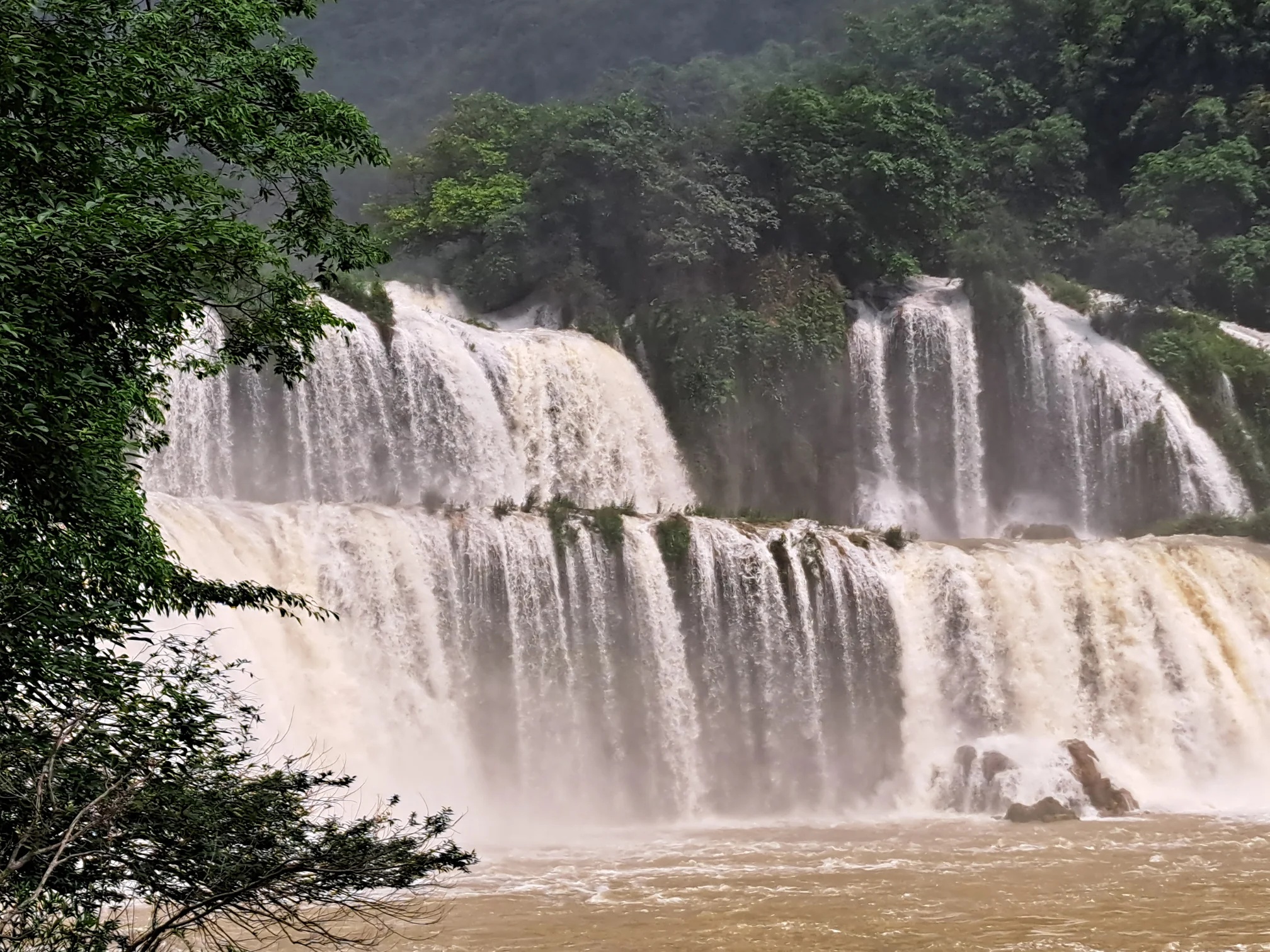
Visit the magnificent Erawan Waterfalls, made up of seven beautiful tiers cascading into one another.
These majestic waterfalls lie in the heart of a lush green jungle, and you will have the opportunity to enjoy a relaxing swim in the natural pools.
More adventurous travelers may float down the river with a life jacket, carried by the current.
Picnic lunch.
Return to the lodge to enjoy the site and its optional activities.
Overnight at the hotel.
5
Sai Yok – Ayutthaya – Bang Pa-In (B, L)
After breakfast, travel to Ayutthaya.
The ancient city of Ayutthaya is known as the “Venice of the East” because of its location along the Chao Phraya River and the waterways surrounding the province.
Many monuments and remains from the period can still be visited in this city, founded in 1350 by King Uthong when Thai populations migrated southward under pressure from neighboring peoples in the north.
Before arriving in the city, visit Bang Pa-In Palace.
Originally, the palace site was a river island. King Prasat Thong (1630–1655) had a palace built beside a lake in the middle of the island as a royal retreat. It was subsequently used by successive rulers of Ayutthaya.
When the capital was moved to Bangkok, however, the palace remained unused for around 80 years.
King Rama IV (1851–1868) revived the site by building a residence there. His son, Rama V (1868–1910), was particularly fond of the palace and stayed there every year, commissioning much of the splendid complex that can be visited today.
After lunch at a restaurant, enjoy an excursion by “Kermit” tuk-tuk to discover the magnificent ruins of ancient temples in the historical park, including Wat Phra Si Sanphet, one of Ayutthaya’s most photographed temples, followed by Wat Phra Mahathat, Wat Mongkhon Bophit and Wat Ratchaburana.
Then stop at Wat Yai Chai Mongkhon, home to one of the largest reclining Buddha images, as well as the ruins of the former Royal Palace and temples.
Transfer to the hotel for some rest.
Overnight at the hotel.
6
Ayutthaya – Uthai Thani – Sukhothai (B, L)
Breakfast, then depart north towards Uthai Thani.
Uthai Thani is a small and relatively unknown province, far from the main tourist routes, yet rich in attractions.
Board a rice barge and enjoy a boat trip along the Sakaekrang River, passing floating villages.
Lunch on board.
Visit Wat Tha Sung, also known as the “Crystal Temple,” and its famous Crystal Hall.
Highly revered locally, this modern temple appears almost frozen in ice thanks to its numerous mirrors and illuminated mosaics.
Continue by road to Sukhothai, the first capital of the Kingdom of Siam.
Overnight in Sukhothai.
7
Sukhothai / Historical Park – Lampang – Chiang Mai (B, L)
Breakfast.
This morning, visit Sukhothai, including the museum and archaeological park, one of the richest and most beautiful in Thailand.
Sukhothai Historical Park contains the remains of the former capital of Siam (Thailand).
It includes temples, historic monuments and remains of an ancient Thai civilization. Located 12 km from the city, the park was listed as a UNESCO World Heritage Site in 1991.
Visit Wat Sa Si, Wat Si Chum, Wat Mahathat and Wat Si Sawai.
Wat Mahathat is the main temple of Sukhothai and one of the most significant complexes of ruins in the area.
Construction began during the reign of King Inthradit (1239–1259), founder of the city, and continued under successive rulers before being completed under King Li Thai in 1345.
Under the reign of Ramkhamhaeng, Wat Mahathat became the religious center of Sukhothai.
Then continue by road towards Chiang Mai.
On the way, stop in the town of Lampang.
Located in the Wang River Valley, Lampang is the capital of the province of the same name, in northern Thailand.
Thanks to its preserved beauty and the friendliness of its residents, the city is considered an emerging destination in Thai tourism.
Travel by horse-drawn carriage to one of Thailand’s most beautiful and majestic temples, Wat Phra That Lampang Luang, located about 20 km from the city.
Wat Phra That Lampang Luang is one of the region’s main attractions. Located on the site of the old town, it is one of the most sacred and famous temples in this historic city.
Unlike many temples in Lampang that display Burmese influences, it was built in the traditional Lanna style. Its 19th-century murals are renowned, and its gateway appears on the provincial seal.
Arrival in Chiang Mai in the evening.
Dinner at your own expense.
To brighten your evening, explore the Night Market on your own.
Overnight in Chiang Rai. (This is how it appears in the original programme.)
8
Chiang Mai – Chiang Rai – City Tour / Boat Trip on the Kok River (B, L)
Depart for Chiang Rai, where you will visit Wat Phra Kaew and the beautiful Mae Fah Luang Museum.
Visit the White Temple, Wat Rong Khun.
Although relatively recent, this temple is the most visited monument in the region. It is the work of Thai artist Chalermchai Kositpipat and construction began in 1997.
Its creator has stated that it will not be completed until 60 to 90 years after his death.
Its distinctive feature is its immaculate white appearance, making it truly unique.
Inside the viharn, murals combine Buddhist symbolism with references to The Matrix, Star Wars, the Twin Towers attacks in New York and even Kung Fu Panda, creating decorations very different from those usually found in religious monuments.
In the afternoon, enjoy a motorized long-tail boat excursion along the Kok River and visit a Tibeto-Burmese village.
Dinner at your own expense.
Overnight in Chiang Rai.
9
Chiang Rai / Golden Triangle – Lanjia Lodge (B, L, D)
Breakfast at the hotel.
In Chiang Rai, you are in the far north of Thailand, a beautiful mountainous and forested region.
This morning, explore the surrounding area. The first road takes you towards the Golden Triangle, a strategic viewpoint overlooking a unique landscape shared by Thailand, Myanmar and Laos, where the three borders meet.
You will also have the opportunity to visit an Opium Museum.
On the way back, discover Yao and Akha ethnic communities, as well as the famous community traditionally associated with women wearing neck rings.
Arrival at Lanjia Lodge.
After a welcome drink, your Lanjia host will introduce you to Thailand’s different ethnic communities, particularly the Hmong and Lahu, who will be your hosts during your stay.
You will also learn about the livelihoods of people living near the Mekong River and about the famous giant Mekong catfish, locally known as Pla Buek, described in the programme as the largest freshwater fish in the world and found in this part of the river.
In the evening, enjoy a generous dinner featuring local specialties, followed by a cultural performance presented by Hmong and Lahu villagers.
Overnight at Lanjia Lodge.
10
Lanjia Lodge – Thaton – Doi Ang Khang (B, L)
After breakfast, begin the day with a visit to the nearby Hmong and Lahu village of Baan Kiew Karn.
Learn about their traditions, beliefs and way of life.
You will be shown how to create your own batik piece or, if you are interested, how traditional animal traps are made and set up.
Lunch.
Depart towards Doi Ang Khang.
Travel via Thaton, a pleasant site dominated by a beautiful Buddha image.
Visit Wat Thaton Temple.
Dinner at your own expense.
Overnight in Doi Ang Khang.
11
Doi Ang Khang – Doi Suthep – Chiang Mai - Overnight Train to Bangkok (B, L)
Visit the Royal Agricultural Station, with its numerous orchards and flower gardens set amid beautiful mountain scenery.
Return by road to Chiang Mai to visit Wat Phra That Doi Suthep, the most famous pagoda in Chiang Mai.
The temple is reached by climbing a staircase of 290 steps, whose railings are shaped like two enormous nagas.
From the terrace, enjoy panoramic views over the entire Chiang Mai Valley.
Then transfer to the railway station to board the second-class overnight train to Bangkok.
Overnight on board.
12
Arrival in Bangkok – Welcome and Free Time (-)
Upon arrival, you will be welcomed and transferred to the hotel to freshen up.
Then enjoy free time for shopping or relaxation.
Meet the driver only (without a guide) for the transfer to the airport for the return flight.
Detailed Pricing
| Number of Participants | 2 pax | 3-4 pax | 5-7 pax | 8-10 pax |
| Price / person | 2,051$ | 1,828$ | 1,725$ | 1,635$ |
Remark:
These rates are based on 3-star hotels and are subject to change depending on the season and your preferred hotel category.
Services
- Transfers by private air-conditioned vehicle according to the program
- Accommodation in a double or TWN room for 02 people/room in 3* hotels or similar, and if there is an individual person, they will be placed in a 03-person room, or in an individual SGL room with a supplement.
- English-speaking guide during visiting times
- All excursions as mentioned in the program
- Overnight train ticket from Chiang Mai to Bangkok (2nd class)
- Meals mentioned (B= Breakfast, L= Lunch, D = Dinner)
- 02 Bottles of water during transfer times
- Taxes and service fees
Hung NGUYEN
Travel Advisor
Do you need our help?
Thailand: From Bangkok to the Golden Triangle, a mythical journey
REQUEST A QUOTEor contact via
 Whatssapp
 Mail
Mail
 Messenger